
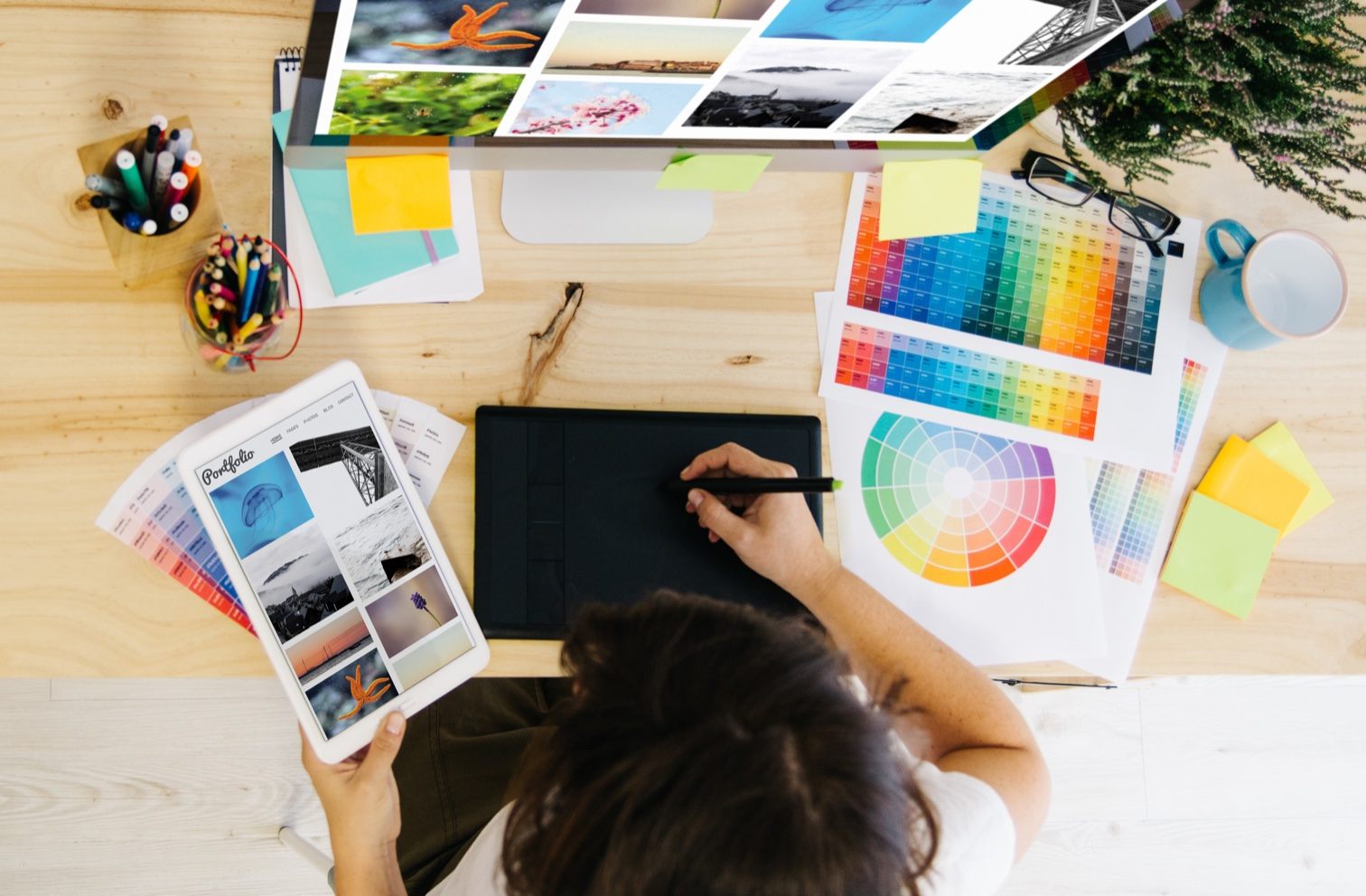
There’s a strange moment that happens when you realize most people are waiting for permission to start.
Permission to launch the idea they keep talking about. Permission to redesign the thing they secretly hate. Permission to make something imperfect and learn along the way. We grow up believing that building anything meaningful requires expertise, money, connections, or some magical level of confidence that appears overnight.
But if you look closely at the people creating the most interesting projects today, many of them didn’t begin with certainty. They began with curiosity.
A designer experimenting with visuals after work eventually turns freelance. A student starts posting animations online and slowly builds an audience. A small business owner redesigns their branding because the old version no longer feels right. Someone with zero technical background launches a website after watching tutorials for two weekends straight.
The internet changed the relationship between ideas and execution. The gap between “I wish I could” and “I made this” has never been smaller.
What matters now is less about whether you’re allowed to create something and more about whether you’re willing to start before everything feels perfect.
Most Great Projects Start Messy
People love polished endings. They admire the beautiful portfolio, the successful product launch, the clean website, the viral campaign. What they rarely see is the awkward first draft hiding underneath all of it.
The first version of almost anything meaningful is usually rough.
The logo doesn’t feel right. The colors clash. The content sounds robotic. The layout breaks on mobile. The video edit looks amateur. The first attempt often feels embarrassing because it exposes the distance between your taste and your current skills.
But that gap is normal.
In fact, creative growth depends on surviving that phase instead of avoiding it.
One of the biggest mistakes beginners make is assuming professionals create flawless work immediately. In reality, experienced creators simply know how to iterate faster. They expect imperfections. They build anyway.
The process of creating something teaches you things that endless planning never will.
You discover what works by seeing what doesn’t.
The Rise of Accessible Creativity
A few years ago, creating professional-looking work required expensive software, specialized education, or hiring an entire team. Today, the tools available to ordinary people are incredibly powerful. Someone can build presentations, edit videos, create branding assets, or even use a Pie chart maker to turn complex information into something visually clear and engaging within minutes.
A solo creator can design graphics, edit videos, build presentations, launch online stores, create brand assets, and market products from a laptop at home.
This shift matters because creativity is no longer limited to traditional “creative professionals.” Entrepreneurs, teachers, students, marketers, freelancers, and small business owners are all becoming creators in their own way.
A teacher designs educational resources. A local bakery builds its visual identity online. A musician creates album covers and promotional content independently. A startup founder develops a pitch deck without hiring an agency.
The barriers have changed.
What once required large budgets now often requires initiative and consistency.
That doesn’t mean tools replace talent. Good ideas, thoughtful design, and human perspective still matter deeply. But modern tools remove enough friction to let more people participate in the creative process.
And that changes everything.
Design Is More Than Aesthetic
When people hear the word “design,” they often think only about appearance. Colors. Fonts. Layouts. Visual style.
But good design is really about communication.
A well-designed product helps people understand something faster. A clean website builds trust before a visitor even reads the text. A thoughtful presentation keeps attention focused instead of overwhelmed. Strong branding makes people remember how something felt.
Design shapes experience.
This is why even small details matter more than people realize. The spacing between elements. The tone of the writing. The way images support a message. The simplicity of navigation. The emotional reaction created by a color palette.
The best design often feels invisible because it removes confusion instead of demanding attention.
And contrary to popular belief, you don’t need to become a world-class designer to improve your work dramatically. You simply need to care about clarity and intention.
Ask simple questions:
- Does this feel easy to understand?
- Does it communicate the right emotion?
- Would someone trust this?
- Is anything distracting from the main idea?
Those questions alone can improve almost any project.
Creativity Thrives When You Stop Comparing Yourself
Comparison has quietly become one of the biggest obstacles to modern creativity.
People scroll through polished portfolios, viral content, perfect branding, and highly curated success stories every day. Over time, this creates the illusion that everyone else knows exactly what they’re doing.
They don’t.
Most creators are improvising far more than they admit.
The designer you admire probably still questions their work. The entrepreneur you follow likely struggles with uncertainty behind the scenes. The artist whose confidence seems effortless probably spent years doubting themselves before sharing publicly.
The danger of constant comparison is that it convinces people their unfinished beginning should already resemble someone else’s refined middle.
That expectation destroys momentum.
Instead of focusing on whether your work looks “professional enough,” focus on whether it’s improving. Progress is a far better metric than perfection.
Every project teaches something:
- how to communicate more clearly,
- how to solve visual problems,
- how to manage time better,
- how to trust your instincts,
- how to refine ideas through feedback.
Skills compound quietly. What feels difficult today may feel natural six months from now if you continue practicing consistently.
Building Something Changes You
There’s also a deeper reason creating things matters.
It changes the way you see yourself.
People often underestimate how empowering it feels to take an idea from imagination into reality. Even small projects create confidence because they prove you’re capable of turning thoughts into something tangible.
That confidence carries into other areas of life.
Someone who launches a small online project becomes less afraid of trying new things. Someone who learns basic design skills starts approaching problems more creatively. Someone who shares their work publicly becomes more comfortable with visibility and feedback.
Creation builds resilience because it forces you to engage with uncertainty directly.
Not every project succeeds. Some ideas fail completely. Some designs don’t work. Some launches get ignored.
But the act of building still matters.
Because every attempt develops the ability to adapt, learn, and continue.
And those qualities become increasingly valuable in a world changing as quickly as this one.
The Future Belongs to Builders
We’re entering a time where adaptability matters more than rigid expertise.
The people thriving today are often the ones willing to learn continuously, experiment publicly, and combine different skills together. Writing, communication, design, technology, storytelling, branding, and creativity are becoming interconnected in ways that didn’t exist before.
Being able to build something from an idea is becoming one of the most powerful skills a person can have.
Not because everyone needs to become an entrepreneur or artist, but because creation encourages agency. It teaches people they can shape things instead of only consuming them.
That mindset matters.
Whether you’re building a business, designing a portfolio, launching a side project, creating educational content, or simply exploring your creativity, the important thing is movement.
Start before you feel fully ready.
Improve while creating.
Learn while building.
Because the people who eventually create meaningful things are rarely the ones who waited for perfect conditions. They’re the ones who started with uncertainty and kept going anyway.
And sometimes, that’s all it takes to begin building, designing, and creating what you want.