
Salmon cooks fast, smells amazing, and can go from perfect to overdone in minutes. That’s why so many home cooks pause mid-recipe and ask, how do you know when salmon is done? It’s a fair question—and a crucial one. Knowing the right signs saves you from dry, tough fish and helps you serve salmon that’s flaky, juicy, and full of flavour.
In this guide, you’ll learn how to know when salmon is done cooking using simple visual cues, texture tests, and temperature tips. Whether you’re baking it in the oven or grilling it outdoors, this article covers it all.
How Do You Know When Salmon Is Done Cooking?
Salmon doesn’t need complicated techniques. It tells you when it’s ready—you just need to recognise the signs.
1. The Colour Change Test
One of the clearest indicators is colour.
-
Raw salmon looks translucent and deep pink.
-
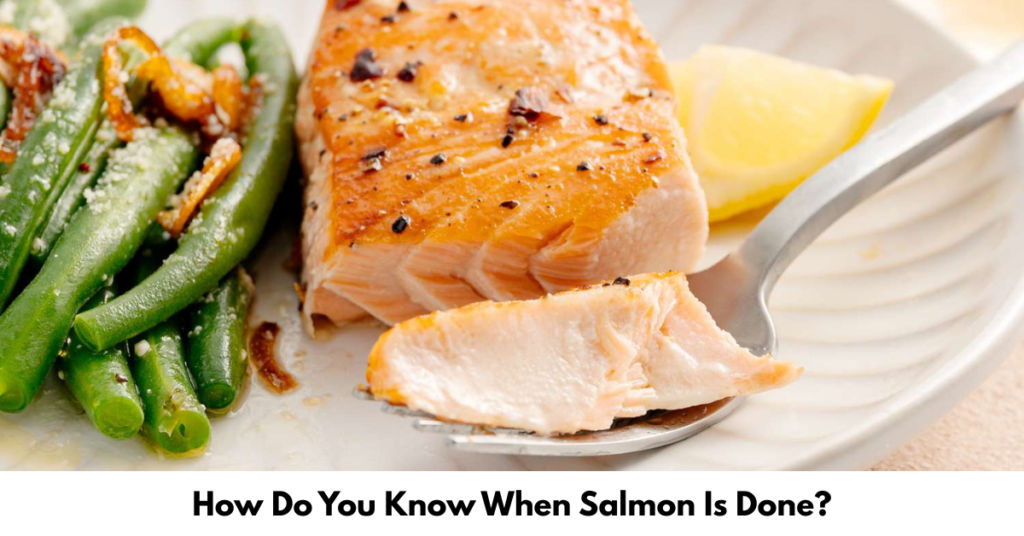
Cooked salmon turns opaque and lighter.
-
The centre should no longer look shiny or raw
If the middle still looks glassy, give it another minute or two.
2. Fork Flaking Test (Quick & Reliable)
This is the most commonly used method for a reason.
-
Gently press a fork into the thickest part.
-
If it separates into clean, moist flakes, it’s done.
-
If it feels stiff or doesn’t flake, it needs more time
This works for oven, baked, and grilled salmon.
3. Internal Temperature Check
For total accuracy, a thermometer is your best friend.
Ideal salmon temperatures:
-
125–130°F (52–54°C): Moist and tender
-
145°F (63°C): Fully cooked (USDA guideline)
Insert the thermometer into the thickest part, not the pan or grill surface.
How Do You Know When Salmon Is Done in the Oven?
Oven cooking is popular because it’s hands-off and consistent.
Signs Oven-Cooked Salmon Is Done
-
Flesh is fully opaque.
-
Salmon flakes easily with a fork
-
Edges appear slightly firm.
-
Internal temperature reaches at least 125°F
Average baking time:
12–15 minutes at 375°F (190°C) for a 1-inch thick fillet.
How Do You Know When Salmon Is Done Baking?
Baking salmon—especially in foil or parchment—can make doneness harder to spot visually.
Best Indicators for Baked Salmon
-
Fork slides in easily
-
Flakes are large and juicy.
-
Salmon pulls apart without crumbling.
Tip: Let baked salmon rest for 2 minutes after removing it from the oven.
How Do You Know When Salmon Is Done on the Grill?
Grilling adds flavour, but timing matters.
Grilled Salmon Doneness Clues
-
Grill marks are visible.
-
Salmon releases easily from the grates.
-
Flesh flakes but stays moist
-
Internal temperature hits 125–130°F
Always grill skin-side down first to protect the flesh.
Common Signs Salmon Is Overcooked
Avoid these red flags:
-
Dry, crumbly texture
-
Excess white protein (albumin) on the surface
-
Strong fishy smell
-
Flesh falling apart too easily.
When in doubt, slightly undercooked salmon is better than overcooked.
Quick Salmon Doneness Checklist
Before serving, check:
-
✔ Opaque color
-
✔ Easy flaking
-
✔ Moist texture
-
✔ Correct internal temperature
If you hit all four, you nailed it.
FAQs: How Do You Know When Salmon Is Done?
How do you know when salmon is done without a thermometer?
Use the fork test. If it flakes easily and looks opaque throughout, it’s ready.
How do you know when salmon is done cooking but still juicy?
Pull it off the heat at around 125–130°F and let it rest briefly.
How do you know when salmon is done baking in foil?
Check flaking rather than colour. Foil traps steam, making salmon look softer.
Is it okay if salmon is slightly pink inside?
Yes. Slight pinkness is normal and safe when salmon reaches the proper temperature.
How do you know when salmon is done on the grill without drying it out?
Cook skin-side down most of the time and flip only once.
Conclusion
So, how do you know when salmon is done? Look for opaque colour, gentle flaking, and the right internal temperature. Whether you’re baking salmon in the oven or grilling it outdoors, these simple checks make all the difference.
Once you understand these signs, cooking salmon becomes easy and confidence-boosting. Want to go further? Explore guides on salmon marinades, healthy seafood recipes, or oven-baking techniques to keep improving your meals.