

Ever had that little dashboard light turn on and make your heart skip a beat? You’re not alone. Knowing how to check oil in a car is one of those basic car skills that can save you stress, money, and serious engine trouble. The good news? It’s much easier than most people think.
In this guide, we’ll walk through how to check oil level, read a dipstick properly, understand oil color, and even touch on oil pressure. Whether you’re a new driver or just want to be more confident under the hood, this article has you covered.
Why Checking Your Car’s Oil Matters (More Than You Think)
Your engine oil does a lot of heavy lifting. It lubricates moving parts, reduces friction, keeps the engine cool, and prevents wear and tear.
If the oil level is too low or the oil is dirty, you could face:
-
Engine overheating
-
Poor fuel efficiency
-
Costly engine damage
-
Reduced engine life
That’s why learning how to check oil on a car regularly is a must—not optional.
How Often Should You Check Oil Level in a Car?
Most mechanics recommend checking your oil:
-
Once a month
-
Before long road trips
-
If your oil warning light turns on
-
After noticing engine noise or overheating
Regular checks help you spot issues early, before they turn expensive.
How to Check Oil in a Car (Step-by-Step)
What You’ll Need
-
A clean cloth or paper towel
-
A parked car on level ground
-
A cooled engine (wait 10–15 minutes after driving)
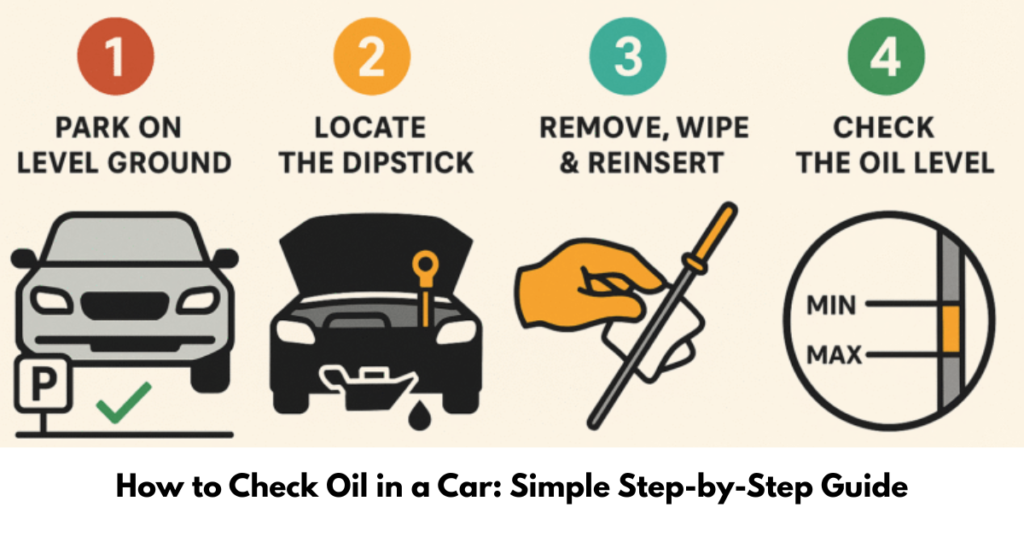
Step 1: Park Safely and Turn Off the Engine
Make sure your car is on flat ground and the engine is turned off. This ensures an accurate oil level reading.
Step 2: Open the Hood and Locate the Dipstick
Pop the hood and look for a handle—usually yellow or orange. This is your oil dipstick.
Step 3: Pull Out the Dipstick and Wipe It Clean
Remove the dipstick and wipe it completely clean using a cloth or tissue. This clears old oil residue.
Step 4: Reinsert and Remove the Dipstick Again
Push the dipstick back in fully, then pull it out once more. This is how you check oil level with dipstick correctly.
Step 5: Read the Oil Level
Look at the markings on the dipstick:
-
MIN / LOW
-
MAX / FULL
The oil level should fall between these two marks. If it’s below MIN, you need to add oil.
How to Check Oil Level in Car the Right Way
When checking oil level:
-
Oil should never be above the MAX line
-
Too little oil = engine damage
-
Too much oil = pressure issues
A balanced oil level keeps your engine running smoothly.
How to Check Oil Color (And What It Tells You)
Oil color gives clues about engine health.
-
Amber or light brown: Oil is clean and healthy
-
Dark brown or black: Oil needs changing
-
Milky or foamy: Possible coolant leak (serious issue)
If you notice unusual oil color, it’s best to get your car checked.
How to Check Oil Pressure (Quick Explanation)
Oil pressure isn’t checked with a dipstick. Instead:
-
Your dashboard oil pressure light warns you
-
Low pressure could mean oil leaks, worn parts, or pump failure
If the oil pressure light stays on, stop driving and consult a mechanic immediately.
Common Mistakes to Avoid When Checking Oil
-
Checking oil right after driving
-
Parking on uneven ground
-
Forgetting to wipe the dipstick first
-
Overfilling the oil
Avoiding these mistakes ensures accurate readings.
FAQs: How to Check Oil in a Car
How do I know if my oil level is low?
If the oil level is below the MIN mark on the dipstick or the oil warning light turns on, your oil is low.
Can I check oil when the engine is hot?
It’s better to wait 10–15 minutes after turning off the engine for accurate results.
How often should I add oil?
Only when the oil level drops below the recommended range. Frequent oil loss may indicate a leak.
What happens if I don’t check oil regularly?
Skipping oil checks can lead to engine overheating, breakdowns, or permanent damage.
Is checking oil different for newer cars?
Some newer models use electronic oil sensors, but many still rely on a traditional dipstick.
Conclusion
Learning how to check oil in a car is a small habit that makes a big difference. From checking oil level with a dipstick to understanding oil color and pressure, these simple steps can keep your engine healthy and your wallet happy.
Make it a routine—your car will thank you. If you found this guide helpful, explore related articles on oil changes, engine maintenance, and car care essentials.