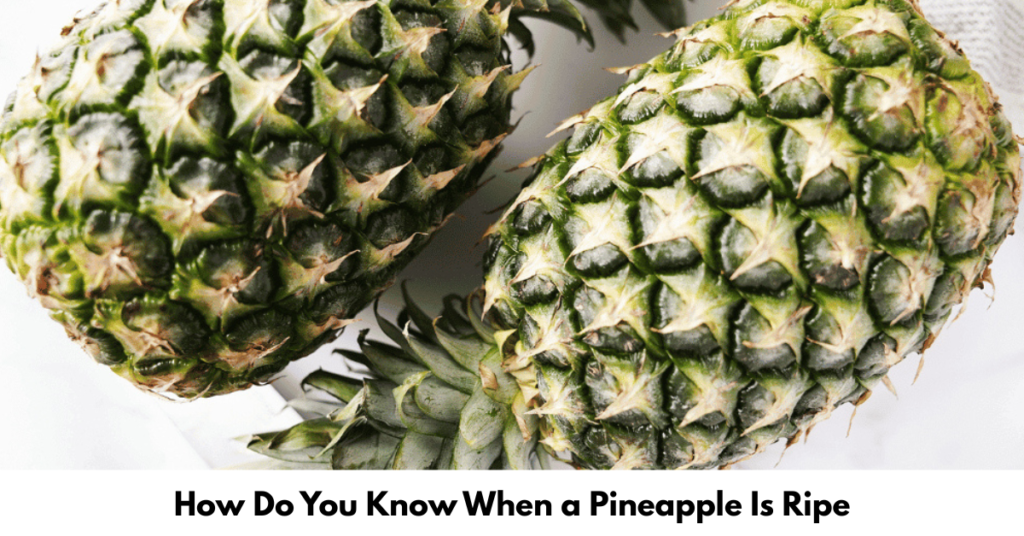

You bring home a pineapple, slice it open with high hopes… and it’s either rock-hard or disappointingly sour. Frustrating, right? If you’ve ever wondered how do you know when a pineapple is ripe, you’re not alone. Picking the perfect pineapple isn’t about guesswork—it’s about knowing what to look for.
In this guide, we’ll break down the clear, reliable signs of ripeness so you can confidently choose a juicy, sweet pineapple every single time.
How Do You Know When a Pineapple Is Ripe? Key Signs to Check
A ripe pineapple sends out subtle but unmistakable signals. You just need to know how to read them.
1. Check the Color (But Don’t Rely on It Alone)
Color is often the first thing people notice, but it can be misleading if used alone.
-
A ripe pineapple usually has a golden-yellow color at the base
-
Green doesn’t always mean unripe, but completely green pineapples are often less sweet
-
Avoid pineapples with dark brown spots or dull gray skin
Tip: Look for yellow starting from the bottom—that’s where ripeness begins.
2. Smell the Bottom of the Pineapple
One of the most accurate ways to know when a pineapple is ripe is by smell.
-
A ripe pineapple smells sweet, tropical, and fruity at the base
-
No smell? It’s likely underripe
-
Sour or fermented smell? It’s overripe
Your nose won’t lie—trust it.
3. Give It a Gentle Squeeze
Texture matters more than many people realize.
-
A ripe pineapple feels firm but slightly soft when pressed
-
Too hard = underripe
-
Mushy or leaking juice = overripe
You want a little give, not a squish.
4. Lift It: Weight Tells a Story
A surprisingly useful trick.
-
A ripe pineapple feels heavy for its size
-
Heaviness means more juice—and more juice usually means better flavor
Always compare two pineapples of similar size and choose the heavier one.
5. Inspect the Leaves (The Crown Test)
The leaves at the top can tell you a lot.
-
Healthy pineapples have green, fresh-looking leaves
-
Dry, brittle, or brown leaves can mean age
-
If a leaf pulls out easily from the center, it’s often ripe
This method isn’t foolproof, but it’s a helpful clue.
Signs a Pineapple Is Overripe
Knowing what not to buy is just as important.
Avoid pineapples with:
-
Strong fermented or vinegar-like smell
-
Soft spots or leaking juice
-
Mold between the scales or near the base
-
Wrinkled skin or dull appearance
Overripe pineapples may taste bitter and spoil quickly.
Common Pineapple Ripeness Myths (Busted)
Let’s clear up some confusion.
Myth 1: Pineapples Ripen After Picking
False. Pineapples do not continue to ripen once harvested.
Myth 2: Yellow Means Sweet
Not always. Some varieties stay greener but are still sweet.
Myth 3: Bigger Pineapples Taste Better
Size doesn’t guarantee sweetness—ripeness does.
How to Store a Ripe Pineapple
Once you’ve found the perfect one, keep it fresh:
-
Store whole pineapples at room temperature for 1–2 days
-
Refrigerate for up to 5 days
-
Cut pineapple should be sealed and refrigerated, eaten within 3–4 days
FAQs: How Do You Know When a Pineapple Is Ripe?
How do you know when a pineapple is ripe at the store?
Look for a sweet smell at the base, slight softness, golden color, and a heavy feel.
Can you eat a green pineapple?
Yes, but it may be sour and less juicy. Green doesn’t always mean unripe, but flavor may suffer.
What is the best smell for a ripe pineapple?
A sweet, fruity aroma—not sour or fermented.
Is a pineapple ripe if the leaves come out easily?
Often yes, especially if other ripeness signs are present.
How long does a ripe pineapple last?
Whole: up to 5 days refrigerated. Cut: 3–4 days in an airtight container.
Conclusion
So, how do you know when a pineapple is ripe? Trust your senses. Look for golden color at the base, smell for sweetness, feel for slight softness, and choose one that feels heavy and fresh. When these signs line up, you’re almost guaranteed a delicious pineapple.
Now that you know how to pick the perfect one, why not explore guides on how to cut a pineapple, pineapple storage tips, or healthy pineapple recipes next?